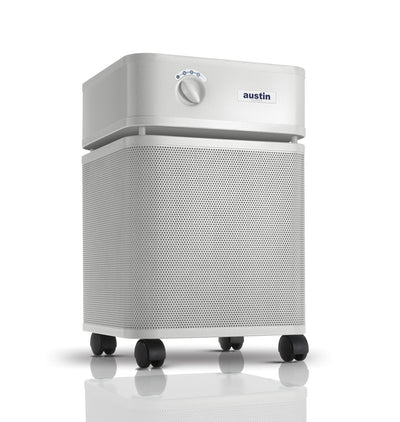
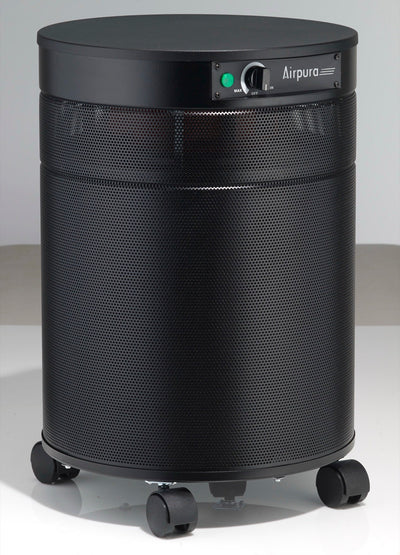


Short answer: with two or more dogs or cats, you are dealing with more dander, more hair and a smell that never fully goes away. Pick a sealed machine with True HEPA for the dander, a pre-filter for the hair, and a heavy carbon bed for the smell, and size it for more air changes than a pet-free home needs. Of what we sell, the Austin Air HealthMate is our first pick for most multi-pet homes, and the Airpura R600 for a large open floor.
One dog or one cat? Our guide to the best air purifier for pets covers that, with sizes for each machine. This page is for homes with two or more.
What changes when you have more than one pet
One cat or one dog is a steady, small source. Two or three is not just double. You get:
- More dander. Dander is tiny flakes of skin, and it is what most pet allergies react to. The Asthma and Allergy Foundation of America notes that pet allergens stay in the air and cling to surfaces, and that cat allergen can linger in a home for months after the cat is gone.
- More hair. Hair is too big to stay in the air long, but it clogs the front of a purifier fast. That is the pre-filter's job.
- More smell, all the time. Coats, beds, litter boxes and accidents add up. Smell is a gas, and only carbon removes it.
So the three things to look for stay the same as for one pet. You just need more of each.
Size up: aim for more air changes
Coverage figures assume one or two air changes an hour, depending on the maker: Austin Air rates at one, Airpura at two. With several pets, or anyone in the house with allergies, aim for four. That halves the two-air-change figure for each machine. In our pets guide we do that math for each machine: the HealthMate goes from 750 sq ft to about 375 sq ft, and the Airpura R600 from about 2,000 sq ft to about 1,000.
In practice that often means two machines instead of one big one: one where the pets spend the day and one in the bedroom. Our guide to how many air purifiers you need walks through the math.
Carbon weight is what fixes the smell
Carbon holds a gas on its surface, and every pound has a fixed amount of surface. With several animals the smell is constant, so a thin carbon pad fills up quickly and the odor comes back. A carbon bed measured in pounds lasts. The EPA's guide to air cleaners says that "to filter gases, choose a portable air cleaner with an activated carbon filter or other filter designed to remove gases."
The independent tester HouseFresh reached the same conclusion. It names the Austin Air HealthMate its pick for homes with multiple smelly pets (HouseFresh pet guide, Danny Ashton, updated October 2026). It also notes the trade-off: the HealthMate draws 147.6 watts on top speed, so running it on high all day costs more in electricity than a lighter machine.
The machines we would pick
For most multi-pet homes: Austin Air HealthMate, $844.99. Pre-filter, medical-grade True HEPA and up to 15 lbs of gas and odor media in a steel cabinet. Austin Air rates it for up to 1,500 sq ft at one air change an hour, or 750 sq ft at two. The main filter is designed to last up to five years.
Good fit: the main room where the dogs and cats spend the day. Skip it if: you need one machine for a big open-plan floor; the R600 moves more air.
For a large open floor: Airpura R600, $849.98. Pre-filter, True HEPA and 18 lbs of activated carbon at 560 CFM in an all-metal housing. Airpura's sales sheet rates it for about 2,000 sq ft.
Good fit: an open kitchen and living area shared by several animals. Skip it if: the space is one closed room. A HealthMate costs about the same and fits a single room well.
For the bedroom: Austin Air Bedroom Machine, $994.99. Pre-filter, medical-grade HEPA and a carbon bed with a HEGA carbon cloth for gases, in a machine Austin Air designs for bedrooms. Austin Air rates it for up to 1,500 sq ft at one air change an hour, or 750 sq ft at two.
Good fit: the room you sleep in, especially if a pet sleeps there too or someone has allergies. Skip it if: budget matters more than the extra gas stage. The HealthMate also has True HEPA and up to 15 lbs of gas and odor media for $150 less.
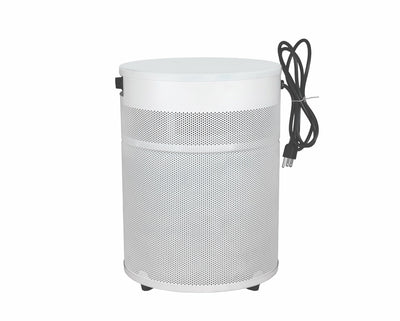
For a smaller room: Airpura R400, $569.98. Pre-filter, True HEPA and 8 lbs of activated carbon at 315 CFM. It covers up to 1,000 sq ft. Airpura recommends under 600 sq ft for more air changes per hour.
Good fit: a second machine for a pet room, an office or a guest room. Skip it if: smell is the main problem in a big space. 8 lbs of carbon fills faster than 15 or 18 with several animals.
Where to put two machines
If you go with two, put the bigger one where the animals spend the day: usually the living room or the kitchen and family room. Put the second in the bedroom and keep that door closed when you can. The bedroom machine then has a smaller, cleaner room to keep clear, and that is the room where clean air matters most for anyone with allergies.
Keep each machine away from food bowls and pet beds by a few feet, with open space around it so air reaches the intake. Do not tuck it behind a couch. Our guide on where to put an air purifier covers the details.
What else to do
A purifier works best alongside a few habits. The AAFA's pet allergy advice includes:
- Keep pets out of the bedroom. AAFA: "Keep your pet and cages, bedding, etc. out of bedrooms or places people sleep." If that is not realistic in your house, a purifier in the bedroom matters even more.
- Run a HEPA air cleaner "at least four hours per day," in AAFA's words. With several pets, we would run it all day.
- Bathe pets weekly if they tolerate it. AAFA says it "may reduce airborne allergens."
- Clean with damp cloths and a HEPA vacuum, so you are not stirring dander back into the air.
Wash pet beds often too. They hold hair, dander and smell, and they sit on the floor where the purifier cannot reach.
Looking after the filters with several pets
Hair is the first thing to clog a purifier in a multi-pet home. Check the pre-filter about once a month. On an Airpura, vacuum it when it turns grey and replace it about once a year. On an Austin Air, replace the pre-filter when it looks dusty. Austin Air recommends replacing it rather than washing it. That keeps air moving and protects the HEPA behind it. Heavy odor also uses up carbon faster than a normal room. When the smell comes back while the machine is running, the carbon is full. Our filter replacement cost guide lists the prices.
4 signs one air purifier is not keeping up with your pets
The smell comes back within hours of cleaning
The odor is outpacing the carbon. Move to a bigger carbon bed, or add a second machine in the room where the pets sleep.
The pre-filter turns grey long before its next check
Hair and dander are landing faster than one pre-filter can hold. On an Airpura, vacuum it and replace it about once a year. On an Austin Air, replace the pre-filter when it looks dusty. Austin Air recommends replacing it rather than washing it.
The pets split their day between rooms
A purifier cleans the room it is in. If the pets spend the day in the living room and the night in a bedroom, each room needs its own machine.
Someone in the house is allergic
With allergies in the picture, size for four air changes an hour, not two. The sizing section above shows what that means for each machine.
Common questions
How do I know if my air purifier is big enough for my pets?
Check the room it is rated for against the room the pets use, at the number of air changes you want: two as a floor, four with several pets or an allergic person. If the smell returns within hours of cleaning, the carbon is outpaced.
Do I need a separate purifier for each pet?
No. Size by room, not by animal. Aim for about four air changes an hour where the pets spend their time, which may mean one machine for the living area and one for the bedroom.
What is the best air purifier for dogs and cats together?
One with a pre-filter for hair, True HEPA for dander and a heavy carbon bed for smell. The HealthMate (up to 15 lbs of gas and odor media) and the R600 (18 lbs of carbon) are the two we point most multi-pet homes to.
Will an air purifier stop pet hair?
It catches loose hair that is still in the air and stops it reaching the HEPA, but most hair falls to the floor too fast. Brushing pets and vacuuming still do most of the work on hair.
Are air purifiers safe for dogs and cats?
A HEPA and carbon purifier only filters the air. Avoid ozone generators; the EPA says ozone "can damage the lungs." Nothing we sell makes ozone or uses an ionizer.
How long should I run it with several pets?
All day. AAFA suggests at least four hours a day for pet allergies, and with several animals the source never stops. Low or medium is fine once the room is under control. See how long to run an air purifier.
If a litter box is the main source of smell, see our guide to the air purifier for cat litter box smell.
Sources: Asthma and Allergy Foundation of America, Pet Allergy; EPA, Guide to Air Cleaners in the Home; EPA, Ozone Generators that are Sold as Air Cleaners; HouseFresh, air purifiers for pets (Danny Ashton, updated October 2026); Austin Air and Airpura specifications as listed on our product pages.