Short answer: an air purifier cannot remove mycotoxins from a house that still has mold growing in it, and nobody can honestly promise that it will. What a True HEPA purifier can do is capture the mold particles floating in the air of one room, and a carbon bed can take out the musty smell. The fix for mold is moisture control and cleanup. A purifier is what you run while that happens, and after.
What mycotoxins are
The EPA's brief guide to mold, moisture and your home says molds produce allergens, irritants, "and in some cases, potentially toxic substances (mycotoxins)." Not every mold makes them, and not all the time.
The CDC is careful about what is known. In its report on mold after hurricanes and floods it states: "No conclusive evidence exists of a link between indoor exposure to airborne mycotoxin and human illness." That does not mean mold is harmless. The same EPA guide lists allergic reactions and asthma attacks in people allergic to mold. It means anyone selling a machine as a mycotoxin cure is claiming more than the science supports.
What an air purifier can and cannot do
| Problem | Can a purifier help? | What actually fixes it |
|---|---|---|
| Mold growing on a wall, floor or ceiling | No | Fix the water source, then clean or remove the material |
| Mold spores and fragments in the air | Yes, in the room it runs in, with True HEPA | Source removal plus filtration |
| Musty smell | Yes, with real carbon | Source removal; carbon handles what remains in the air |
| Dust that has already settled | No | A HEPA vacuum and damp wiping |
The musty smell has its own cause. The CDC notes that molds "produce a variety of volatile organic compounds" that "are responsible for the musty odors associated with fungal growth." Those are gases, so HEPA does nothing for them. Carbon is what adsorbs gases, and how much carbon matters.
Fix the moisture first
The EPA puts it in one line: "The key to mold control is moisture control." Fix leaks, dry wet materials within 24 to 48 hours, and keep indoor humidity down. The EPA says a moldy area smaller than about 10 square feet, roughly a 3 ft by 3 ft patch, is in most cases a job you can do yourself. For larger areas, the EPA points to its remediation guidance, and if the damage came from sewage or other contaminated water, the EPA says to call in a professional. If the room is damp, read air purifier vs dehumidifier for mold before you buy anything.
What to look for in a purifier for mold
- True HEPA, rated 99.97% at 0.3 microns, sealed so air cannot slip around it.
- Carbon in pounds, for the musty smell.
- No ozone and no ionizer. The EPA warns against ozone generators as air cleaners.
- Enough airflow for the room, sized at two or more air changes an hour. See what size air purifier you need.
The machines we would point you at
| Model | Particle filter | Carbon | Coverage at 2 air changes an hour | Price |
|---|---|---|---|---|
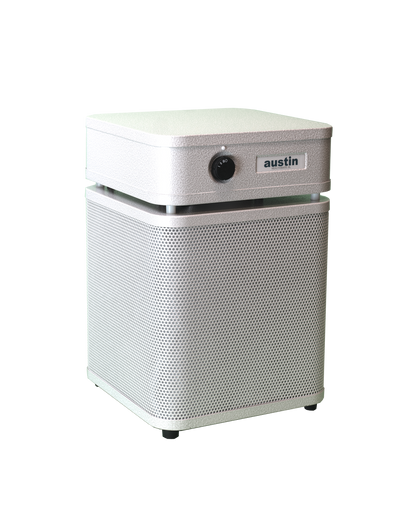
| Austin Air HealthMate | True HEPA | 15 lbs activated carbon | 750 sq ft | $844.99 |
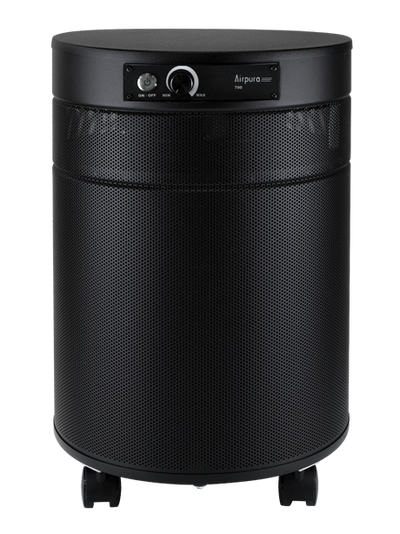
| Airpura R600 | True HEPA | 18 lbs activated carbon | About 2,000 sq ft | $849.98 |
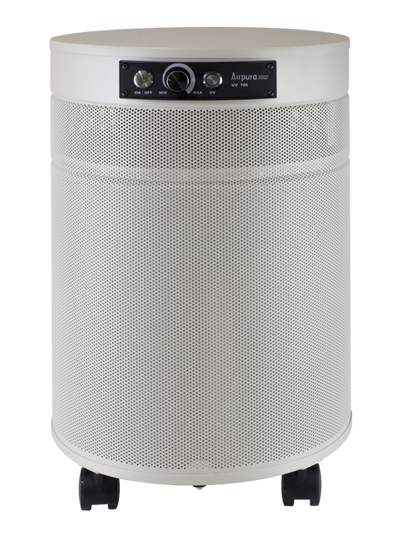
| Airpura UV600 | True HEPA plus a UV-C lamp | 18 lbs activated carbon | About 2,000 sq ft | $1,099.98 |
Coverage figures are the makers' own. Prices are ours on October 23, 2026. For most homes dealing with a past or ongoing mold problem, the HealthMate or the R600 is the place to start; both pair True HEPA with a heavy carbon bed. The full set is on the mold and mildew page, and the longer guide is best air purifier for mold.
Several rooms
A purifier cleans the air of the room it is in. For a whole floor, either size one machine for the open space and keep doors open, or put a smaller machine in each room people sleep in. Bedrooms come first, because that is where people spend the most hours.
Common questions
Does an air purifier remove mycotoxins?
No one can promise that, and we will not. A True HEPA purifier captures airborne mold particles in the room it runs in. Whether that changes anyone's mycotoxin exposure has not been shown; the CDC says there is no conclusive evidence linking indoor airborne mycotoxin exposure to illness.
Will a purifier kill mold?
No. Mold grows where there is moisture. A purifier does not reach the wall, the carpet or the inside of a cavity. Fix the water, clean or remove the material, and run the purifier for the air.
Does UV-C help with mold?
A UV-C lamp inside a purifier treats only the air passing the lamp. It does nothing for mold growing in the house. The HEPA filter does the capturing either way.
Should I test for mycotoxins?
The CDC notes there are no health-based standards or exposure limits for airborne mold in homes, so a test result is hard to act on. If you can see or smell mold, the EPA's advice is to clean it up and fix the moisture, whatever the species.
Can I run it during cleanup?
Yes, and afterward. Cleanup stirs particles into the air. For larger jobs, follow the professional's containment plan.
Every machine ships free with a 30-day home trial. Tell us about your rooms at support@freshhomeair.com and Nolan will answer himself.