
Short answer: once the outdoor air is clean again, air the house out, then clean. Mist and wet-mop hard floors, wipe surfaces with a damp cloth, vacuum with a HEPA vacuum, and wash everything fabric that can go in the washer. Then run an air purifier with a heavy carbon filter on high for the days it takes the last of the smell to leave the soft surfaces. Smoke smell is a gas held in fabric, foam and dust, so cleaning removes most of it and carbon catches what keeps coming out.
Why smoke smell lingers after the fire is out
Wildfire smoke is a mix of fine particles and gases. The particles make the haze. Many of the smells come from the gases and from compounds stuck to the particles. When smoke gets indoors, both settle into the softest, most porous things in the room: curtains, carpet, couch cushions, bedding, clothes in open closets, and the dust on every shelf.
Days later, those surfaces slowly give the smell back. That is why a house can smell smoky after the sky has cleared, and why opening a window for an hour rarely fixes it.
For the smoke event itself, see our guide to the best air purifier for wildfire smoke. This guide is about the cleanup after.
Step 1: wait for clean air, then air the house out
Check the Air Quality Index for your ZIP code on the EPA's AirNow site before you open anything. Opening windows while smoke is still in the area brings more in.
Once the air is clean, the EPA's guidance on wildfires and indoor air quality is to "air out your home by opening windows or the fresh air intake on your HVAC system and run the exhaust fans in the kitchen and bathrooms." Cross-ventilate if you can: windows open on opposite sides of the house move far more air than one.
Step 2: clean hard surfaces without stirring the dust
Smoky dust is part of the smell. Moving it around just puts it back in the air. The EPA's steps:
- "Before sweeping indoor and outdoor hard surfaces, mist them with water to keep dust down. Follow with wet mopping."
- "Use a damp cloth or wet mop on lightly dusted areas."
- "If you choose to vacuum dusty surfaces, use a high-efficiency particulate air (HEPA)-type vacuum."
Wipe window sills, blinds, the tops of door frames and shelves, where smoky dust collects and nobody looks.
Step 3: wash the fabrics
Most of the smell lives in fabric. Wash what you can: curtains, throws, cushion covers, bedding, pet beds and clothes that were out in the open. For carpet and upholstery, vacuum slowly with a HEPA vacuum first. If the smell stays in a couch or a rug after that, a steam clean is the next step.
Change the filter in your furnace or central air system as well if it ran during the smoke. It has been catching smoke particles, and it will blow that smell back through the house every time the system turns on. Our guide to MERV 13 filters covers what to put in its place.
Step 4: run a carbon air purifier on high
Cleaning removes most of the source. The rest seeps out of foam, carpet backing and walls for days, and that part is a gas. HEPA alone does nothing for a gas. The EPA's guide to air cleaners says that "to filter gases, choose a portable air cleaner with an activated carbon filter or other filter designed to remove gases." The more carbon, the longer it keeps up.
Run it on high in the room that smells worst, with doors closed, for the first few days. Then move it or turn it down as the smell fades. The EPA's advice to "run it as often as possible on the highest fan speed" is written for smoke events, and the same logic holds while a house is still giving off smoke smell.
The machines we would pick for smoke smell
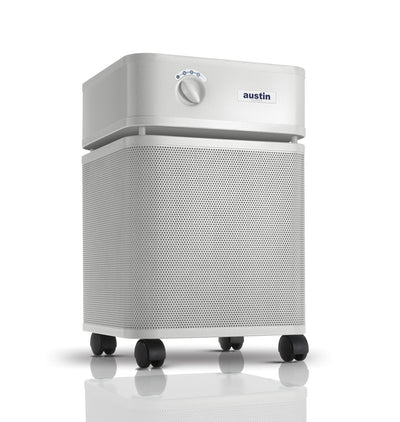
For most homes: Austin Air HealthMate Plus, regular price $894.99. True HEPA and up to 15 lbs of chemical adsorption media, part of it carbon treated for chemicals that plain activated carbon handles poorly. Austin Air rates it for up to 1,500 sq ft at one air change an hour, or 750 sq ft at two.
Good fit: a living room or bedroom that still smells smoky after cleaning, and a house that may face smoke again next season. Skip it if: particles are your only worry and the smell is gone. The standard HealthMate has the same HEPA and up to 15 lbs of gas and odor media for $50 less at regular prices.
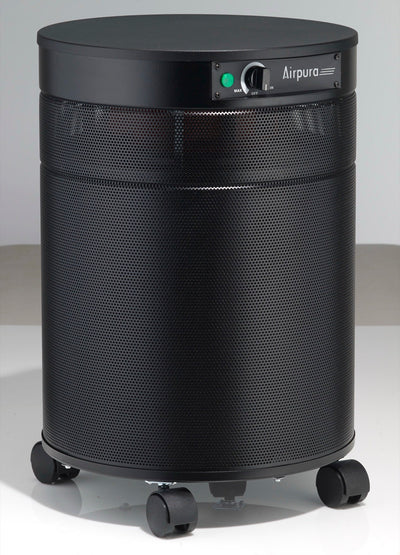
For a large open space: Airpura R600, $849.98. True HEPA and 18 lbs of activated carbon at 560 CFM. Airpura's sales sheet rates it for about 2,000 sq ft.
Good fit: an open-plan floor where one machine has to move a lot of air. Skip it if: the smell is in one small closed room. A smaller machine costs less there.
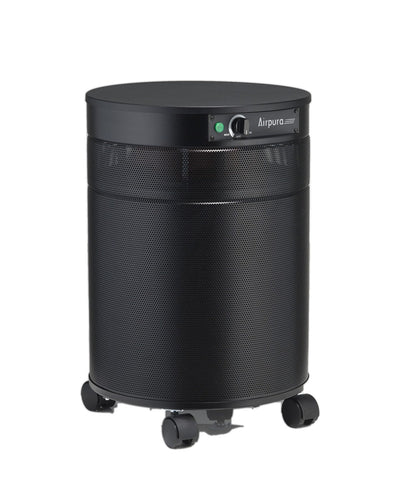
For the heaviest smell: Airpura C600, $1,049.98. 26 lbs of activated carbon at 560 CFM. Its particle stage is a HepaBarrier post-filter that Airpura lists as capturing about 95% of particles, not True HEPA.
Good fit: the smoke has cleared and the smell is what is left, and you want the most carbon. Skip it if: you also need a machine for the next smoke event. For smoke particles, True HEPA in the HealthMate Plus or R600 is the better choice.
What not to do
- Do not use an ozone generator. They are sold for smoke odor, but the EPA advises against them. It says that at safe levels "ozone is not effective at removing many odor-causing chemicals," and that ozone "can damage the lungs."
- Do not dry-sweep or dry-dust. It throws smoky dust back into the air.
- Do not cover the smell with fragrance. Candles, sprays and plug-ins add more to the air without removing anything.
- Do not air out while the AQI is still high. Check AirNow first.
How long until the smell is gone?
It depends on how much smoke got in and how much fabric and carpet the house has. A light exposure in a house with hard floors can clear in a day or two of airing out and cleaning. A heavy exposure with lots of soft furnishings can take a week or more of cleaning plus a carbon purifier running. If the smell keeps coming back from one spot, look for the source there: a rug, a closet, a mattress, the HVAC filter.
Before the next smoke event
If you live where smoke comes most years, a little preparation makes the cleanup far smaller. Pick one room to be your cleaner air room, usually a bedroom, and keep a purifier with True HEPA and carbon there ready to run. Keep spare HVAC filters on hand. When smoke arrives, close windows early, run the purifier on high in that room and keep its door shut. Less smoke gets into the fabrics, so there is less smell to remove afterwards. The full setup is in our wildfire smoke guide.
For smoke from your own wood stove or fireplace, see air purifiers for wood stove smoke.
For smells that are not smoke, such as cooking or a musty room, see the best air purifier for odors.
Common questions
Does an air purifier remove smoke smell?
Only if it has a real carbon filter. Smoke smell is mostly gas, and HEPA catches particles, not gases. A machine with several pounds of activated carbon, run on high, removes the smell that keeps seeping out of fabrics after you clean.
Should I air out my house after wildfire smoke?
Yes, once the outdoor air is clean. Check the AQI on AirNow first. The EPA suggests opening windows or the fresh-air intake on your HVAC system and running the kitchen and bathroom exhaust fans.
Do I need to replace my HVAC filter after wildfire smoke?
If the system ran during the smoke, yes. The old filter holds smoke particles and smell, and it will spread them through the house each time the system runs.
How do I get smoke smell out of a couch or mattress?
Vacuum slowly with a HEPA vacuum, wash any removable covers, and air it out in clean air if you can. If the smell stays, a professional steam clean is the next step. A carbon purifier in the room helps catch what comes out in the meantime.
Can I just open the windows and wait?
Airing out helps a lot, but fabrics, carpet and dust keep giving off smell for days. Cleaning removes the source; airing out and a carbon purifier deal with what is left.
Sources: EPA, Wildfires and Indoor Air Quality; EPA, Guide to Air Cleaners in the Home; EPA, Ozone Generators that are Sold as Air Cleaners; EPA AirNow; Austin Air and Airpura specifications as listed on our product pages.