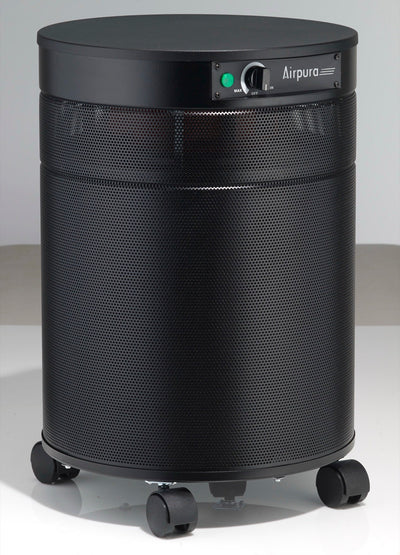

Short answer: a UV light on its own is a weak air cleaner. The EPA says typical home UV air cleaners do not deliver enough UV to kill most airborne microorganisms, because the air passes the lamp too quickly or the lamp is too weak, and that UV should be used in addition to filtration, not instead of it. Some UV lamps also make ozone, which the EPA warns damages the lungs. Where UV makes sense is inside a cabinet that already has HEPA and carbon, shining on what the filters have trapped. Of what we sell, the Airpura UV600 is built that way.
What UV-C does
The EPA calls this technology ultraviolet germicidal irradiation, or UVGI. It uses UV lamps to kill or deactivate microorganisms such as viruses, bacteria and fungal spores, either in the air or growing on surfaces. Most lamps used in homes are low-pressure mercury lamps that give off UV-C light at 254 nanometers, a wavelength the EPA says has been shown to have germicidal effects.
Two limits matter. First, UV deactivates microbes but does not remove them. The EPA notes that dead or deactivated biological particles can still contain irritants, allergens or toxins. Second, UV does nothing to gases. The EPA says research has not shown that UV light can remove gases effectively in portable home air cleaners.
Why contact time decides everything
UV is a dose. The EPA says that given enough exposure time and lamp power, UV light can stop a microorganism from reproducing. But it also says some bacterial and mold spores resist UV, and that reliable deactivation of spores takes high lamp power and exposure times on the order of minutes and hours, rather than the few seconds typical of most UV air cleaners.
That is the problem with UV in a moving air stream. Air blown past a lamp gets seconds of light at most. The EPA's conclusion is direct: typical UV air cleaners designed for homes do not deliver enough UV to kill or deactivate most airborne microorganisms, because the exposure is too short or the intensity too low, so UV does not appear to work as a sole control device.
The EPA also says it found no research showing that UV reduces how allergenic dust mites or mold are. Both dead and live mold particles can cause allergic reactions in sensitive people.
The ozone problem
The EPA says UV air cleaners can generate large amounts of ozone as a by-product. Uncoated UV-C lamps that emit light at 254 nanometers and below can turn oxygen into ozone. Some manufacturers coat their lamps to stop this, and the California Air Resources Board certifies air cleaners, including UV units, for ozone emissions.
Ozone is not a cleaner you want to breathe. The EPA says inhaled ozone can damage the lungs, and that relatively low amounts can cause chest pain, coughing, shortness of breath and throat irritation. It also says ozone at levels within public health standards has little potential to remove indoor air contaminants, and that ozone reacting with chemicals indoors can raise the total amount of organic chemicals in the air. In one test with new carpet, the reaction produced aldehydes. No federal agency has approved ozone generators for use in occupied spaces, and the FDA limits ozone output from indoor medical devices to 0.05 ppm.
If you are looking at a UV purifier, check that its lamp sits inside the cabinet and that the maker states it produces no ozone. Our guide to ionizers vs HEPA covers ionizers, another ozone risk.
Filtration does the main job
A filter takes particles out of the air for good. The EPA says portable air cleaners often reach a high clean air delivery rate by using a HEPA filter, that gases need a separate filter such as activated carbon, and that the longer a purifier runs, the more air it cleans. It also says UV should be used in addition to, not as a replacement for, particle filtration, because UV does not capture or remove particles. And it reports that adding UV to HEPA or other high-efficiency filters offers only minimal infection-control benefit over the filters alone.
So judge any UV purifier by its filters first: True HEPA for particles, carbon measured in pounds for odors and chemicals, and enough airflow for the room. Our guide to HEPA vs activated carbon explains what each layer does.
Where UV inside a filter cabinet makes sense
Time is the one thing a filter can give a UV lamp. Air passes a lamp in seconds, but whatever a filter traps stays there for hours, days and months. The EPA says UV works for keeping microbial growth off HVAC cooling coils and drain pans because of those longer exposure times, and that prolonged direct UV exposure can destroy growing microbes on surfaces such as filters. It also says spores are harder: most need a very high dose.
That is the design behind a lamp mounted inside a purifier, aimed at the filters. The filters catch the particles. Airpura says the lamp sterilizes germs and mold spores trapped on the filters so they are not released back into the air.
Put plainly: in a machine like this, the HEPA filter is what takes mold spores and other particles out of the air you breathe. The lamp is an extra layer aimed at what the filter holds. Given what the EPA says about spores, buy a UV model for its filters first and count the lamp as a bonus.
UV air purifier pros and cons
| Pros | Cons |
|---|---|
| Inside a filter cabinet, the lamp gets long exposure to what the filters trap | In a moving air stream, seconds of exposure is too short for most microbes, per the EPA |
| Uses 254 nm UV-C, which the EPA says has germicidal effects | Uncoated lamps can make ozone |
| Adds a step for people worried about mold on a filter | Does not remove particles, gases or odors |
| Works alongside the filters rather than replacing them | The lamp needs replacing and adds cost |
Is an air purifier with UV light worth it?
Only if the filters are right first. A UV lamp adds nothing to how many particles, odors or chemicals a purifier removes. The EPA says UV does not capture or remove particles, and that research has not shown UV removes gases in home air cleaners. What the lamp adds is treatment of what the filters have already trapped.
Before you pay for one, check four things:
- The lamp sits inside the cabinet, aimed at the filters, with no UV light reaching the room.
- The maker states the machine makes no ozone. The EPA says UV lights without adequate lamp coatings may have the potential to emit ozone.
- The filters stand on their own: True HEPA for particles and carbon measured in pounds for odors.
- You know the lamp's replacement schedule. Airpura says every 18 to 24 months for the UV600 and UV700.
The clearest way to price the lamp is to compare two machines that differ only by it. The Airpura UV600 is built on the R600 platform. Both have True HEPA, 18 lbs of activated carbon and 560 cfm of airflow, Airpura rates both for up to 2,000 sq ft, and both list no ozone and no ionizer. Our regular price on November 26, 2026 is $1,099.98 for the UV600 and $849.98 for the R600, so the lamp costs $250 more up front, plus its replacements.
Our take: if mold on a filter is your specific worry, buy the UV600. For everything else, the Airpura R600 filters the same air for less. Every model with a lamp is on our air purifiers with UV light page.
The machines we would pick
For most rooms: Airpura UV600. HEPA plus carbon plus a UV-C germicidal lamp. Airpura says the lamp sterilizes germs and mold spores trapped on the filters so they are not released back into the air, and recommends replacing it every 18 to 24 months. Airpura rates the UV600 for up to 2,000 sq ft. Made in Canada.
Good fit: someone who wants HEPA and carbon plus an extra UV layer on the filters. Skip it if: you want no lamp to maintain; the HealthMate below is filtration only.
For a larger cabinet: Airpura UV700. The same HEPA, carbon and UV-C design in Airpura's larger 700 cabinet. Airpura rates it for up to 2,500 sq ft at two air changes an hour.
Good fit: someone who wants the UV design in the bigger 700 cabinet. Skip it if: the UV600 already covers your room.
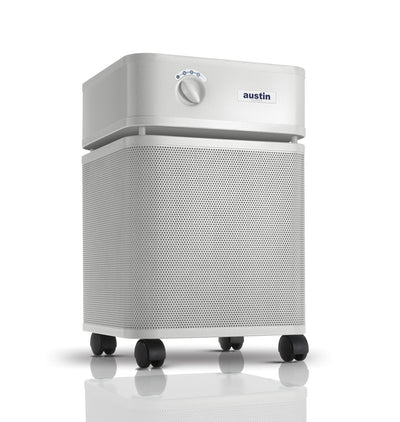
Filtration only: Austin Air HealthMate. True HEPA plus up to 15 lbs of gas and odor media, made in Buffalo, NY. Austin Air rates it for up to 1,500 sq ft (about 750 sq ft at two air changes an hour).
Good fit: anyone who agrees that filters do the main job and wants nothing to replace but the filter. Skip it if: mold on the filter is your specific worry.
All three ship free and come with our 30-day home trial. See every model in our UV air purifiers collection.
Common questions
Do UV air purifiers work?
Not well as the only cleaner. The EPA says typical home UV units do not deliver enough UV to kill most airborne microbes. A UV lamp works best inside a purifier that already has HEPA and carbon filters.
Are UV air purifiers safe?
The two risks the EPA names are ozone from uncoated lamps and possible eye injury from UV light. Choose a unit with the lamp fully enclosed and a stated zero ozone output, and follow the maker's safety instructions.
Do UV air purifiers kill mold?
Mold spores resist UV, and the EPA says killing them takes a high dose and long exposure. In a purifier, the HEPA filter is what captures airborne spores; the lamp is an extra. No purifier fixes a mold problem. The EPA says mold growing indoors should be removed and its moisture source fixed. See our mold guide.
Does UV light remove odors or chemicals?
No. The EPA says research has not shown UV can remove gases in home air cleaners. Activated carbon does that job.
Is UV better than HEPA?
They do different jobs. HEPA removes particles from the air. UV deactivates microbes but leaves them in place. The EPA says UV should add to filtration, not replace it.
How often does a UV lamp need replacing?
Follow the maker. For the UV600 and UV700, Airpura says every 18 to 24 months. Our Airpura replacement filter guide covers filter timing.
Sources: EPA, Residential Air Cleaners: A Technical Summary, 3rd edition; EPA, Guide to Air Cleaners in the Home; EPA, Ozone Generators that are Sold as Air Cleaners; Austin Air and Airpura product specifications as listed on our product pages.